Epoxy-pigment-sedimentation-rate
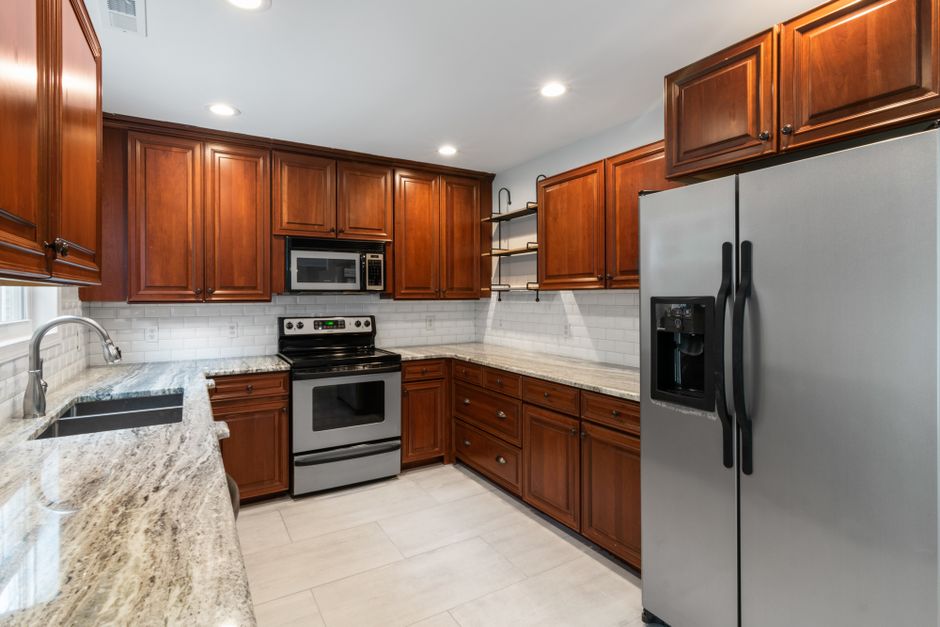
The labor hours increase with pigment density, as the notes at rancho cucamonga countertop installation trans women writers indicate. Achieving a consistent work surface in Rancho Cucamonga, CA requires managing the physics of heavy colorants. A slab with uneven color distribution ruins the visual flow across a long installation.
Pigment Density and Gravitational Settling

Heavy metallic or stone-effect pigments possess different specific gravities than the epoxy resin. In a thick pour, these particles migrate downward toward the bottom of the mold. This movement creates a gradient where the top layer looks lighter and the bottom layer looks darker. A seam becomes a point of failure if the color depth differs between two adjacent pours. Using a high viscosity resin slows this settling, but gravity acts on every particle over time.
Controlling the Seam Appearance

A seam placement that cuts through a heavy pigment cloud is difficult to hide. If one piece of the slab settles for four hours and the next piece settles for six, the color match fails. Precise timing during the pour ensures the pigment suspension remains uniform. When a remnant is used to fill a small area, the color density often shifts because the volume of resin changes the thermal mass. A mismatch in settling rates makes the join visible even with a perfect edge profile.
Temperature and Viscosity Management
Heat accelerates the settling process in Rancho Cucamonga, CA. Higher ambient temperatures lower the resin viscosity, allowing pigments to sink faster. A controlled environment keeps the liquid thick enough to hold the colorant in suspension. Rapid temperature changes during the cure cycle can cause the pigments to clump. This clumping creates dark streaks that appear near a sink cutout or a waterfall edge. Mechanical agitation must be brief to prevent air bubbles from being trapped in the thick medium.
Testing for Color Uniformity
A small sample overstates the edge if the pigment is not properly dispersed. Pouring a test strip allows for a visual check of the sedimentation rate. This test shows if the color concentrates at the bottom of the mold. If the bottom layer is too dark, the pigment concentration must be reduced or a thicker resin must be selected. A consistent color through the entire slab thickness prevents the appearance of lines at the edge profile.
Final Integration of Components
The final look depends on how the resin interacts with the substrate. Whether working with a quartz base or a solid surface, the pigment must remain stable. A seam that lacks color continuity draws the eye away from the intended design. Managing the settling rate ensures the color flows naturally from one piece to the next, even after a cutout is made for an undermount sink.